- 56% of employers plan to increase the number of
employees in 2022
- 54% of employees in qualified roles are considering a career change in 2022
- Employees in the positions of financial controllers and analysts, e-commerce
experts, IT recruiters, FMCG and technology salespersons, employees in retail
chains and construction; or highly specialized employees in pharmacy or
production might earn higher wages in 2022.
The ongoing coronavirus pandemic continues to affect global economies and labor markets, including the Czech labor market. However, despite another strong pandemic surge in the winter and spring of 2021, positive changes are evident. Companies again intensify their recruitment, they have successfully implemented hybrid work schemes, wages have risen slightly in 2021, and many industries plan to increase salaries this year as well, according to Hays' annual Salary Guide.*
Lockdown in the first third of 2021 caused a freeze on recruitment in many companies, and new job opportunities were usually sought only by those candidates for whom the change was crucial. Employers mainly focused on setting up new working regimes, adapting the work environment to the new style of work, which, probably permanently, will mean greater flexibility and a greater proportion of work from home. In the summer, the easing of restrictions brought a new lease of life to the labour market. Companies intensified recruitment and the number of candidates who were actively searching new jobs also increased. However, not enough to meet the needs of employers. Thus, the need to approach candidates directly has increased significantly, so headhunting is no longer a recruitment method used exclusively for top management roles, and operational roles are increasingly being filled in this way.
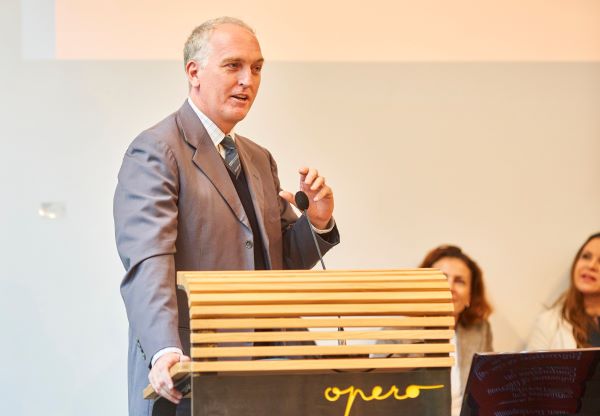
"The candidate shortage across the professions will most likely not ease in 2022. The need for applicants to fill open vacancies will be huge, and it will put further pressure on accelerating automation in many industries - mostly in production or logistics. According to the survey, 56% of companies plan to increase the number of employees, and another 14% will consider recruitment according to the situation during the year," says Sándor Bodnár, Managing Director of Hays in the Czech Republic and Romania.
Over the past year, the skilled jobs market has seen moderate wage growth,
typically in the 3-5% range on average. "It is still the case that the highest chance for higher salaries are
offered to profiles that are typically in high demand - currently, for example,
online marketing, operational financial roles, experts in research and
development, IT professions. On an individual basis, wage increases may be
higher, by 15% on average, depending on the urgency of the employer and the
type of position. We can expect increased upward pressure on wage growth this
year due to labour shortages, but also rising consumer prices and thereby
inflation. However, companies most often plan to maintain growth at the current
level, i.e. not exceeding 5%, " comments Sándor Bodnár on the results
of the survey.
However, considering current economic developments and especially the growth of inflation in recent weeks, the wage growth in 2022 remains an open topic.
LABOUR MARKET DEVELOPMENTS IN SELECTED BUSINESS SECTORS
Accountancy & Finance
The sector is facing a shortage of candidates for operational roles. The most sought-after professionals who meet the requirements of companies are not actively looking for a new job opportunity, but employers do not compromise on their requirements and wait for ideal candidates with proper qualification, managerial and language skills. Opportunities for managers have decreased significantly, mainly due to team mergers and centralization. Companies looking for candidates for managerial roles thus have a choice of many quality candidates, but financial managers find it difficult to find a new job. The most sought-after professions include an independent accountant, financial controller and analyst, preferably with English language skills. Wage growth in these positions is expected to be around 6%.
|
Role |
Minimum |
maximum |
|
Independent Accountant |
45 000 |
65 000 |
|
Junior Financial Controller |
40 000 |
50 000 |
|
Finance Analyst |
55 000 |
75 000 |
Banking
As banks usually do not compete significantly with the offered salary and the offer of benefits to the candidates, staff turnover between individual institutions is low and it is therefore necessary to approach applicants without previous experience in this environment. The biggest number of open positions is in retail banking, some more vacancies appear as a result of digitization of services, for example in the field of business analysis. The pandemic has led to an increase in online and telephone communication with clients, so even employees in financial institutions can now enjoy greater flexibility and a higher ratio of work from home, which is usually 1-3 days a week, depending on the role. The expected increase in wages in the area of back office roles will be around 5% this year, basic wages in the front office will rather stagnate. Potential wages increase will rather concern the bonus component, which could reach up to 30% of the gross monthly salary.
|
Role |
Minimum |
maximum |
|
Personal Banker - retail |
28 000 |
38 000 |
|
Investment Specialst |
40 000 |
48 000 |
|
Risk Analyst |
50 000 |
80 000 |
Administration & HR
Due to the higher proportion of work from home, administrative positions have decreased significantly, and we will probably not see a significant increase this year either. Positions are usually paid at a similar levels as was usual in the years before the onset of the pandemic. However, the importance of HR departments is fundamentally changing, being now transformed into crisis teams, dealing with cases of covid-positive employees, prevention and safety at work, and amendments to labour law documents. The significant increase in recruitment last year caused a massive increase in demand for recruiters in all fields, but most in IT. Thus, an enhanced bonus component and hiring bonus which can amount to one month´s salary for IT recruiters, are no longer an exception.
|
Role |
Minimum |
maximum |
|
Receptionist |
25 000 |
35 000 |
|
HR Specialist |
40 000 |
55 000 |
|
IT Recruiter |
50 000 |
80 000 |
Sales & Marketing
The need for experienced salespeople and experts, especially in online marketing and e-commerce, continued to grow last year and still remains at the forefront of interest of employers. However, the activity of applicants is low and therefore it is important to focus on other recruitment techniques, such as headhunting and approaching candidates directly. The lack of people with the right experience forces companies to compromise on requirements and consider also motivated candidates with experience from other business sector. Wage growth in Sales will be evident mainly in the technical segment, especially in industrial automation and electrical engineering, and also in the area of online marketing and e-commerce across market segments, it can reach up to 7-10%. The wages might also increase in FMCG industry, where there is a risk of an outflow of applicants to sectors with high potential. Here, the growth may reach 3-7%.
|
Role |
Minimum |
maximum |
|
Sales Representative / technical |
37 000 |
65 000 |
|
Key Account Manager / FMCG |
60 000 |
95 000 |
|
Online Marketing Specialist |
45 000 |
80 000 |
Information Technology
The number of job offers for IT experts is growing again, it is no exception when candidates have up to 5 job offers to consider and choose from. The possibility of remote work has increased, which allows companies to expand the selection of candidates beyond the location and surroundings of the employer´s operation throughout the Czech Republic. This trend can potentially contribute to a levelling of wages between Prague and other regions. Listed roles are now generally more complex, with the most sought-after profiles still being developers, cyber security or cloud technology experts, data and business analysts. However, there is no widespread wage growth, any increases are more on an individual basis.
|
Role |
Minimum |
maximum |
|
Developer, Java, .Net |
60 000 |
120 000 |
|
DevOps Engineer |
80 000 |
130 000 |
|
Data Analyst |
70 000 |
80 000 |
Engineering
Sector continues to face a shortage of commodities for manufacturing companies, especially the automotive industry and they are therefore unable to plan their activities accurately. Some industries have seen growth in terms of demand and production capacity, such as development centres or the packaging industry. Candidates in development and automation are in high demand- PLC programmers, PLC test engineers, automation technicians; the most popular profiles include a combination of IT and engineering knowledge such as SW or Electrical Engineer. On these roles, there is also the greatest probability of obtaining a more attractive salary, but the increase will be rather on an individual basis, according to the current urgency of the company.
|
Role (3-5 yrs exp.) |
Minimum |
maximum |
|
PLC Programmer |
45 000 |
85 000 |
|
Quality Engineer |
50 000 |
80 000 |
|
Project Engineer |
50 000 |
75 000 |
Construction & Property
The construction sector is very active across areas. Not surprisingly, logistics and residential construction are the busiest, and administrative buildings are not left behind either. In particular, Property and Facility managers with several years of experience, as well as quality managers and sustainability experts, which is a trend in commercial construction, are in demand. Although the level of basic wages in the sector stagnated, there was a visible shift in the bonus components and the offer of benefits. The bonus components have been increased by an average of 15%, and the trend in benefits is to build a tailor-made portfolio where employees select benefits according to their needs. Basic wages are expected to increase in the construction sector by up to 10% on average this year due to staff shortages.
|
Role |
Minimum |
maximum |
|
Property Manager |
50 000 |
90 000 |
|
Facility Manager |
45 000 |
80 000 |
|
Construction Manager / Development |
60 000 |
120 000 |
Shared Services Centres
In terms of demand for employees, the shared services sector was one of the busiest in 2021. New job roles appeared mostly in customer service and financial services. There were relatively enough candidates on the market, given that as a result of the pandemic, some companies decided to end their operations in the Czech Republic. Other companies, on the other hand, strengthened their teams, so workforce supply and demand were relatively balanced. Applicants now have higher wage demands, which is often a complication in the recruitment process. Companies that have been able to adapt to these increased financial requirements, albeit at the expense of some benefits, are more successful in attracting candidates. Reducing travel restrictions will bring foreign applicants to the Czech market, who will help to fill difficult-to-fill roles, for example those with non-standard language combinations or knowledge of atypical technology.
|
Role |
Minimum |
maximum |
|
Customer Service Specialist |
40 000 |
48 000 |
|
AP/AR Specialist |
39 000 |
48 000 |
|
IT, 1st level Support |
43 000 |
50 000 |
*Methodology:
The recruiting trends and benefits data is based on a survey among 937 candidates and 511 employers conducted in October 2021. The salary data has been compiled using information gathered during 2021 from the Hays Czech Republics’ database, considering thousands of job listings, job offers and data from Hays´ candidate database.